

The Quantitative Reasoning section is often considered the most difficult part of the ISEE Test, and the Mathematics Achievement section is the longest part of the test. Plus, you are not allowed to use a calculator for these two sections. Sounds fun, right? You will have 35 minutes to answer 37 questions in the Quantitative Reasoning section.
ISEE Upper Level Test Quantitative Comparison Questions
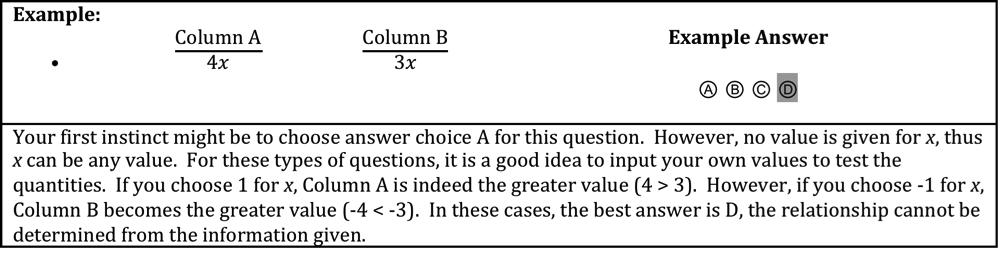
Each question contains two quantities that you must compare. Some questions will include extra information to help answer the question. Each answer choice designates a particular relationship between the two quantities:
- The quantity in Column A is greater.
- The quantity in Column B is greater.
- The two quantities are equal.
- The relationship cannot be determined from the information given.
Expectations for Mathematic Competency on the Upper Level ISEE
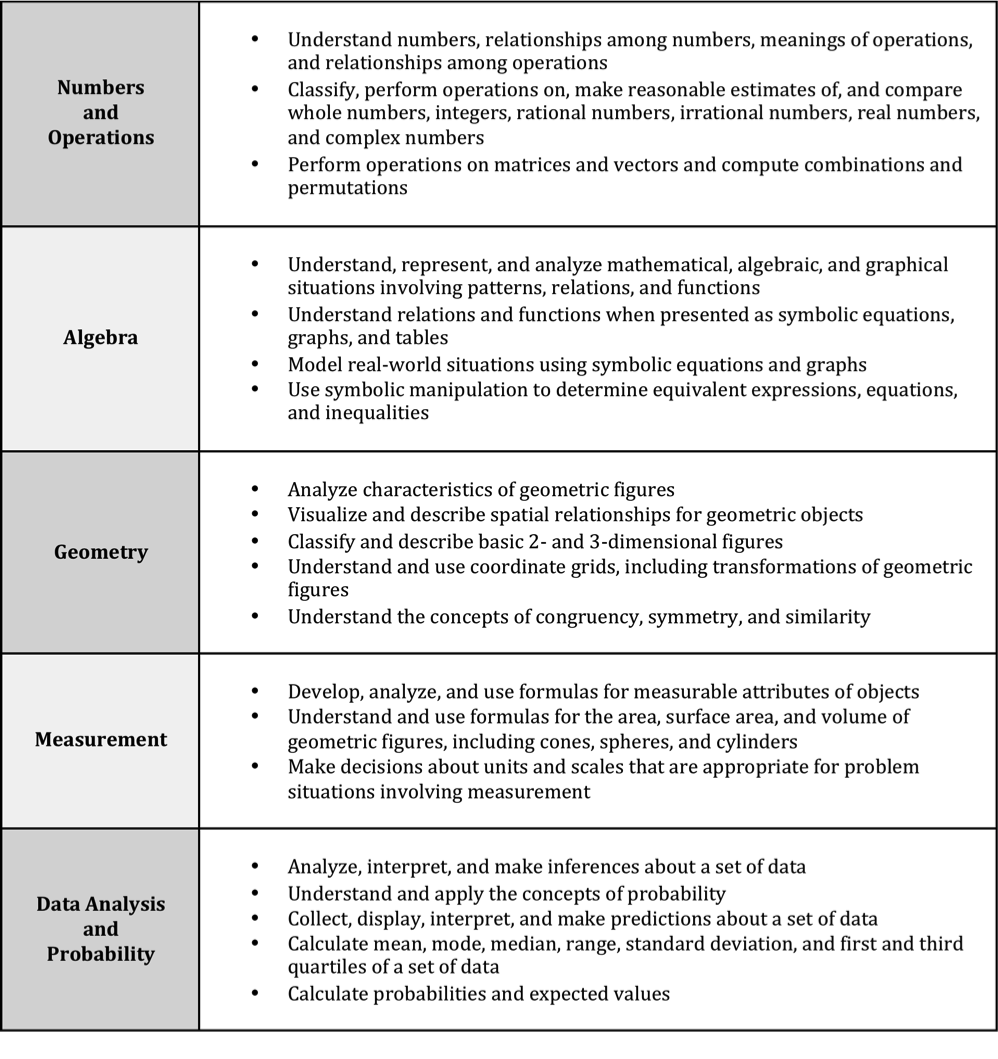
The ERB follows the standards set forth by the National Council of Teachers of Mathematics (NCTM) to determine how the ISEE will test a student’s ability in mathematics. Students taking the Upper Level ISEE should be familiar with the following concepts, as stated by the ERB:
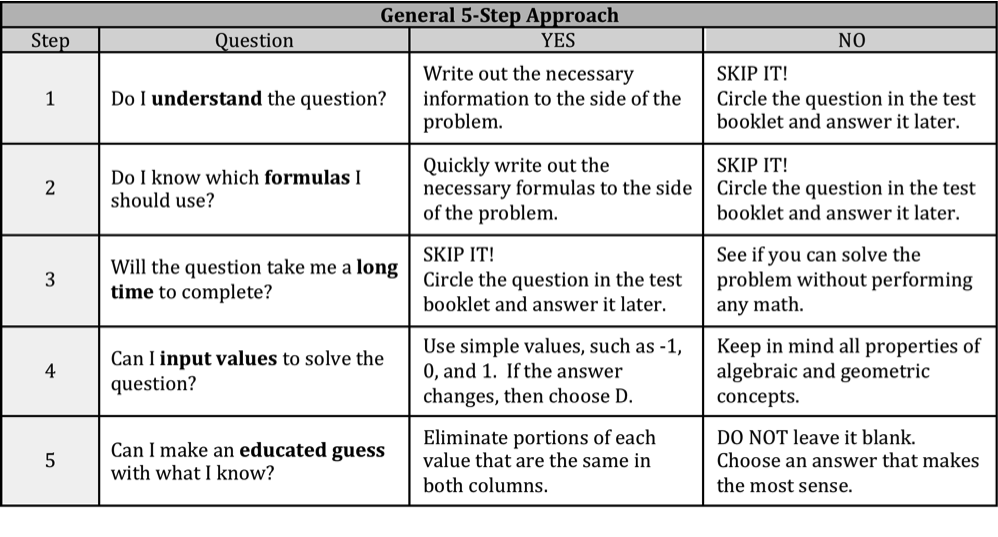
Systematic Approach to ISEE Quantitative Comparisons
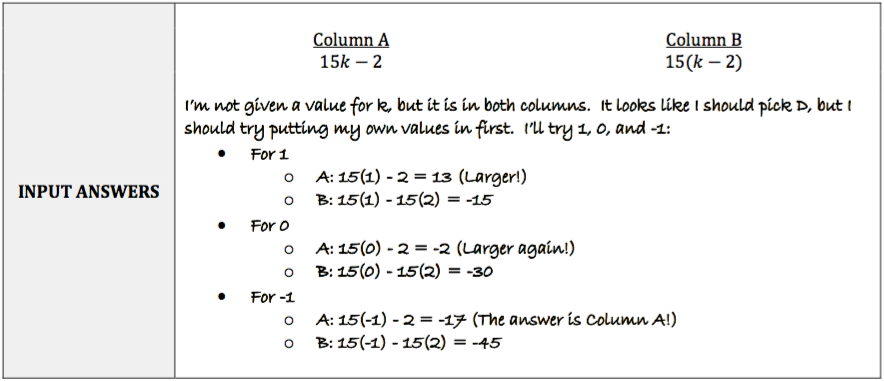
The hardest part about Quantitative Comparison questions is where answer choice D might be the correct answer. Don’t automatically assume something is unsolvable!
Read More about the ISEE Test from Piqosity


[…] Quantitative Comparison Questions on the Upper Level ISEE […]