


Are you preparing to take the SAT, ACT, ISEE, or another standardized test in the coming school year? Follow the tips in this guide on how to use practice tests to improve your test prep and your performance on test day.
Is Taking Practice Tests a Good Way to Study?
Yes! Taking a number of practice tests ahead of an exam will help you approach the real thing more prepared and with more confidence. You’ll anticipate its style of questioning and the pacing required to to finish in time, and the atmosphere of taking the test will feel more comfortable—this is especially important, as familiarity with the exam reduces test day anxiety and stress. This is especially true for long exams like the ACT or SAT, as working through full-length practice tests can help you build the mental endurance to stay focused through to the end of the exam.
Further, practice testing improves the quality of your studying, helping you learn and retain information more effectively. If you review the results of your practice test, you can identify the concepts you missed and strategically target them in your studying, learning from your mistakes. Practice exams are also a safe place to experiment with test-taking strategies, from pacing approaches to guessing strategies.
Scores tend to improve when students retake a real exam, but time constraints and other factors could make it difficult to take multiple official tests. By taking multiple practice exams and approaching each one like the actual test, you can get all the benefits of retesting without the hassle of preparing and paying for more than one test administration.
Practice tests are useful even when you aren’t preparing for an exam. Taking quizzes and tests is also great way to sharpen your skills in courses like English Language Arts and math. Whether you’re preparing for a subject-based test or you just want to improve your grades, using practice tests will help you gauge your understanding of subtopics and make a study plan to improve that is personalized to your needs.
How to Use Practice Tests Effectively in Your Studying
Practice tests allow students to evaluate their academic understanding and test readiness without the pressure of a real test.
Retesting is one of the most impactful study strategies, but what does this look like in practice? When should you take a practice test, and how many should you take? If you take more practice tests, will you improve your score more? These questions and more are covered in these guidelines to using practice tests, which can help you make a study plan for exams to earn the score you want.
Make Practice Test-Taking Feel Like the Real Thing
Your practice test sessions should be under conditions similar test day. Getting a glimpse of what it feels like to take the test will make the real situation feel more approachable, as you’ll know what to expect. If a student learns to be comfortable taking a long practice exam in a quiet, imposing room, then they will be more at ease when they are in that same environment to take their actual test.
A practice test environment simulating the real exam could look like a desk in the library, a classroom after-school with other test-preppers and a proctor, or another calm, solitary place. Whatever it looks like, make sure your practice test session is:
- Timed and structured like the real test.
- Quiet with no distractions. (Silence and put away your phone!)
- At a desk in a well-lit room.
- Absent of study/reference materials.
Understand the Results to Inform Your Studying
Use practice test results as a diagnostic to dig deeper into your topic weaknesses and inform your studying. Your practice test results will reveal how much progress you will make before test day, indicating both the topics you aced and the concepts you missed.
Reading the Score Report
Before going into your question-by-question performance, analyze the test results as a whole. On any score report or the results page for your practice test on Piqosity, charts will indicate several characteristics of your test performance, including total number of correct/incorrect questions, accuracy by topic, pacing, and a breakdown of your accuracy by subtopic.
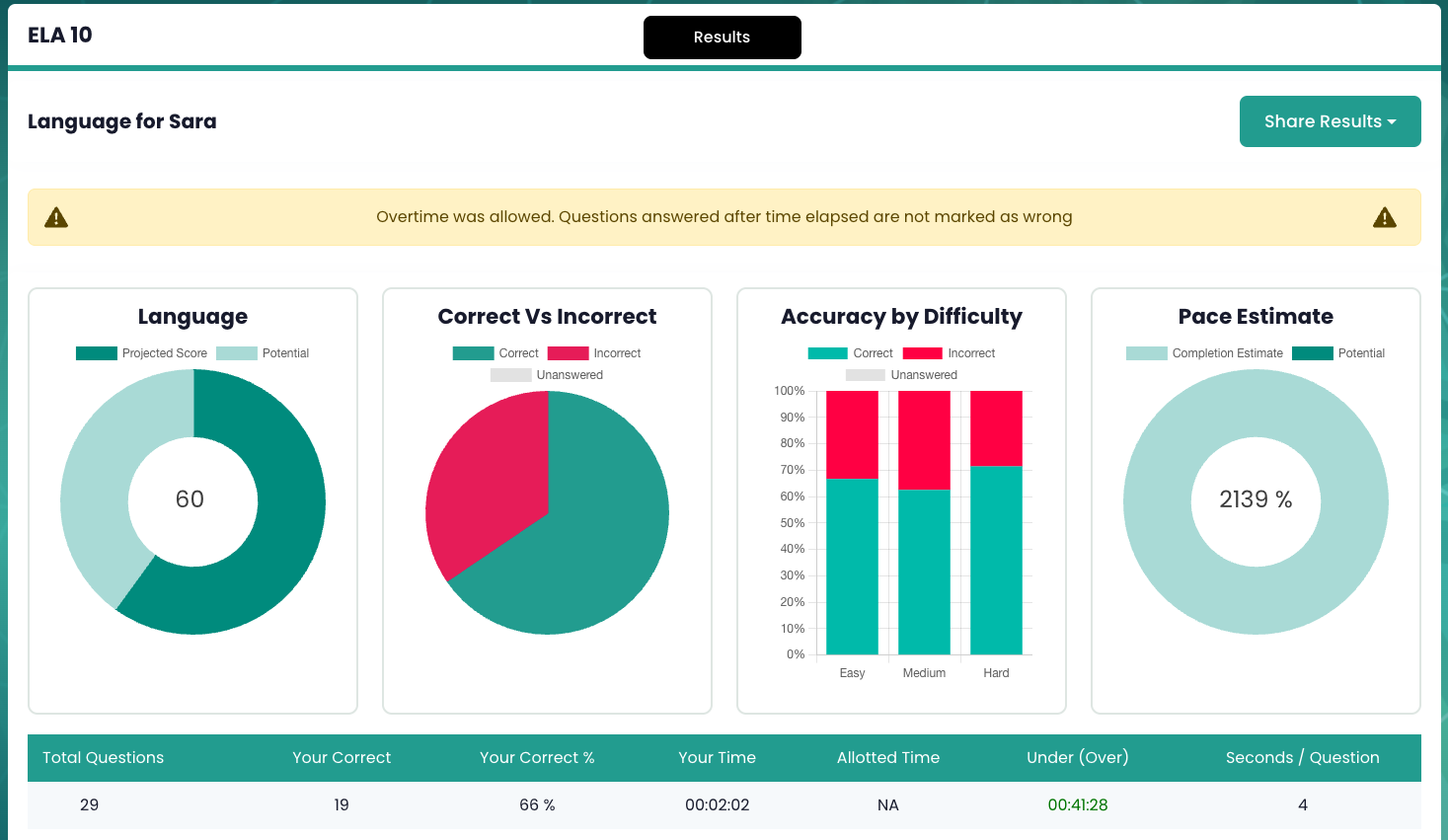
An ELA 10 diagnostic practice test score report. This student answered about 66% of the questions correctly. As made evident by the pace estimate on the right, they would have answered more correctly if they hadn’t rushed.
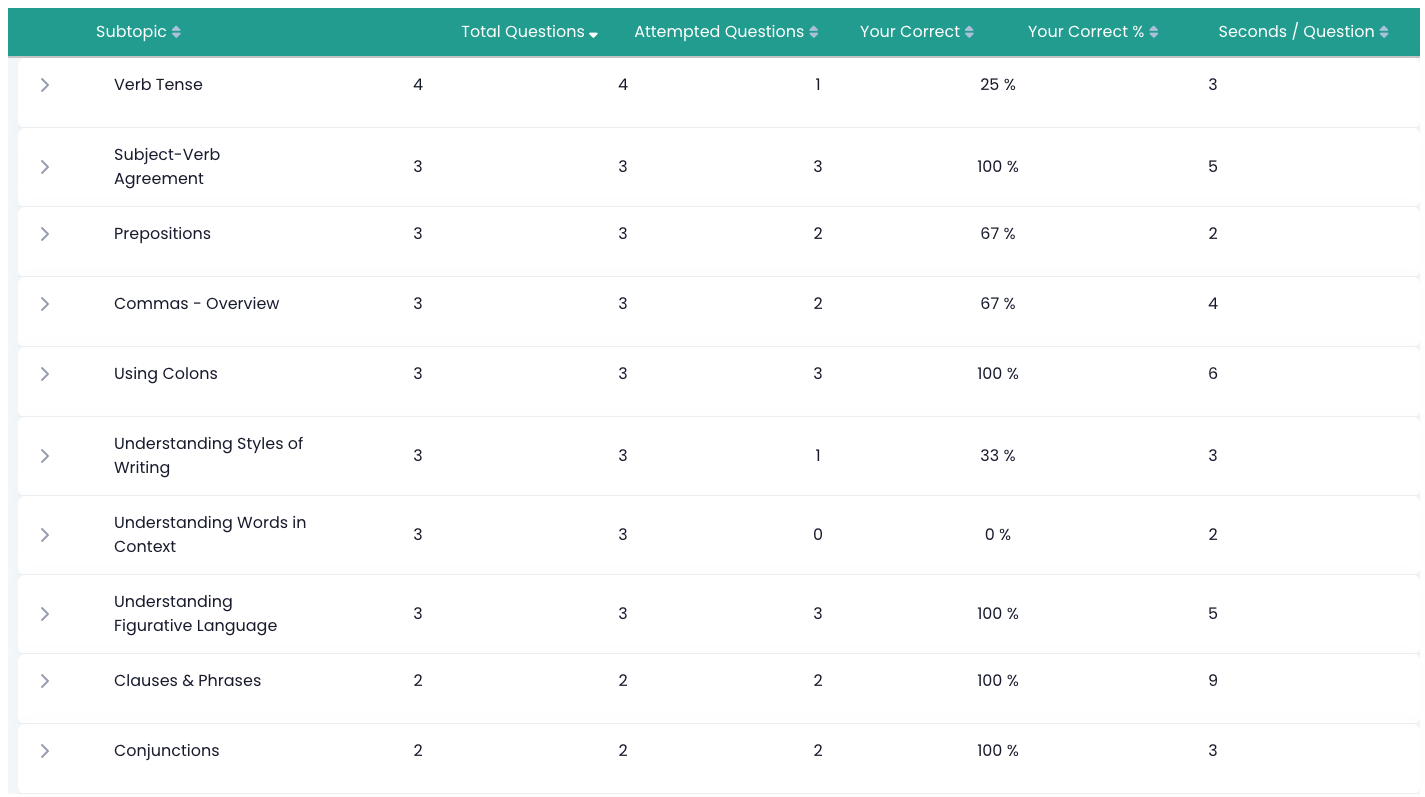
An ELA 10 diagnostic practice test score report question breakdown. This student needs to practice a ton of verb tense and styles of writing questions and work on their knowledge of prepositions and commas.
How to Analyze Mistakes on Test Questions
The questions you answered wrong on a practice test are a valuable resource in pinpointing your academic limitations; however, not every wrong answer is due to a lack of knowledge. When reviewing your completed practice test, consider the specific circumstances of each wrong answer by rereading the question:
- If you didn’t know the formula or process, then study the concept.
- If you rushed to answer, then work on pacing.
- If you made a careless error, then practice slowing down and reading carefully.
If you don’t remember the approach you took, try answering the question now to see how you do. If you’re able to work through it with no problem after the fact, then the issue is likely with your pacing on the test; if you still don’t know what to do or keep getting the wrong answer, then you’ve spotted a knowledge gap you need to address.
To re-learn the concept from a missed question, utilize the tools at your disposal until you wrap your head around it. This includes:
- Answer explanations
- Piqosity topic lessons
- Formula sheets
- Example problem work-throughs
- Video lessons
- YouTube tutorials
- Instruction from a teacher or tutor
Develop a Study Timeline—Space Out Practice Tests
Your practice test should inform your studying—test prep sessions should include a mix of:
- Working through missed questions from the practice test
- Reviewing concepts through topic lessons and notes
- Completing targeted practice questions on the topic
You can think of the practice test results as a checklist, where you work through the concepts you missed questions about and check them off once you can confidently answer questions on that topic. Remember to dedicate time to all sections of the test. Focus most of your efforts on the subject(s) that need the most help, but don’t neglect your performance in other areas.
While taking several practice tests ahead of the exam improves your test readiness, that is not true if they aren’t spread out, giving you time for further studying based on the results before you take the next test. Taking a bunch of practice tests in the weeks before test day will NOT improve your performance; in fact, it’ll just stress you out, probably harming your performance on the real thing.
Months ahead of test day, start with a diagnostic practice test for your exam before you do any studying to have an initial exposure to the test. This test will also define your current scoring capability, and identify the areas you need the most improvement in. Commence your studying by working through the questions you missed, using topic lessons, formula sheets, or other learning materials to aid you. Continue learning and mastering topics tested throughout the exam with practice questions, then taking another practice test once you feel like you’ve made solid progress and repeat the process.
Test prep study plan guides:
- SAT Prep Timeline: How to Study for the SAT
- ACT Prep Timeline: How to Study for the ACT
- Piqosity’s Suggested ISEE Exam Prep Timeline
As a final warning: Do NOT take a full-length practice test the day before, as it leads to severe test fatigue for the day of your test.
Practice Tests and Personalized Test Prep for the SAT, ACT, and ISEE
Now that you know how to use practice tests to study for a great score, it’s time to source the study materials you’ll need—and Piqosity is here to help! Along with our full-length, online ELA and Math courses for grades 5-12, we offer full test prep courses for the ISEE, ACT, and SAT! Each test prep course includes practice exams, dozens of concept lessons, personalized practice software, and more.
Piqosity’s simple, all-in-one learning platform is perfect for who want to score better on their exam in less time. Our tools monitor your progress to tell you exactly what you need to practice to reach your desired score. Each test prep course comes complete with:
- Up to 12 full-length practice tests
- Over 70 concept review lessons
- Hundreds of personalized practice questions
- For the ACT: a comprehensive 62-part Video Course
- For the SAT: Full-length PSAT 8/9 and 10/11 practice tests.
- Intelligent Math Remediation
- …and more!
The best part? You can try out all of Piqosity’s features with our free community account. When you’re ready to upgrade, Piqosity’s year-long accounts start at only $89.